• training tips
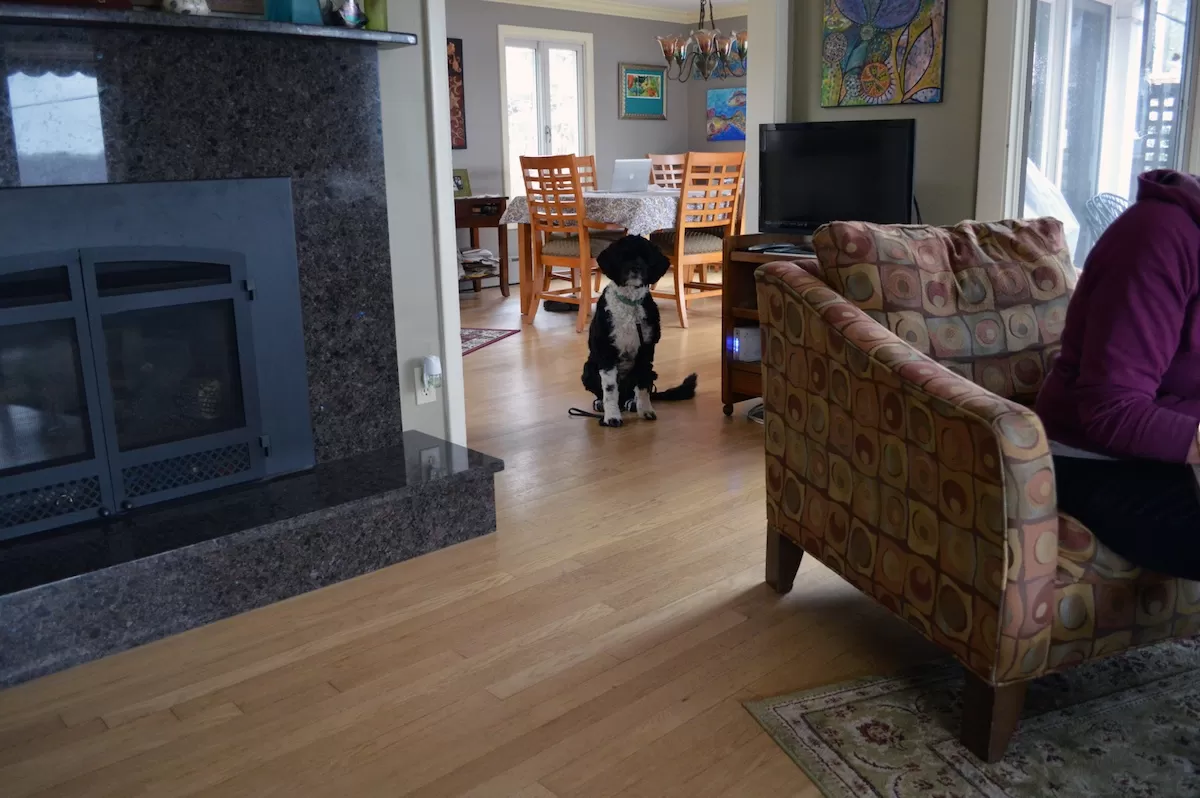
The front door is where many otherwise pleasant dogs become pushy, frantic, or downright unsafe. The leash appears, a visitor rings the bell, or someone reaches for the handle, and the dog launches forward. When you teach dog doorway manners correctly, you are not teaching a party trick. You are creating calm movement, preventing escapes, and showing your dog that access to the outside world happens through cooperation, not chaos.
A dog who can wait at a doorway is easier to live with everywhere. School mornings become less hectic. Carrying groceries is safer. Visitors can enter without being bowled over. And when a door opens unexpectedly, your dog has a learned habit of pausing instead of making a break for the street.
Why Doorway Manners Matter More Than "Wait"
Many owners approach the doorway as a single command problem: tell the dog to sit, say "wait," open the door, and hope it holds. That may work in a quiet practice session, but it often falls apart when real life adds pressure. A delivery driver, children running outside, another dog across the sidewalk, or the sound of keys can overwhelm a dog that only knows how to perform for a cookie.
Doorway behavior is really about state of mind, boundaries, and your dog's relationship to movement and access. Dogs that rush doors are often rehearsing the idea that their excitement controls the moment. They see an opening, they surge, and the door becomes their starting gun.
The goal is not to make your dog frozen or nervous around doors. The goal is a dog that can remain calm, respond to direction, and move through the threshold when invited. That distinction matters. Reliable obedience should give your family more freedom, not turn daily life into a rigid routine.
How to Teach Dog Doorway Manners Step by Step
Start with a door that does not lead to the biggest distraction in your dog's life. An interior doorway, a quiet back door, or the front door at a low-activity time can work well. If your dog is already exploding toward the door, beginning during the busiest part of the day simply gives the dog another chance to practice the wrong behavior.
Establish calm before touching the handle
Bring your dog to the doorway on leash if needed. Do not rush to give repeated commands. First, wait for a calmer posture: four paws grounded, less staring at the door, less whining, less forward pressure. Your dog does not need to look like a statue, but they should be mentally available to you.
If the dog drives ahead, quickly move them away from the threshold and reset. Do not argue, pull continuously, or turn the moment into an exciting game. Quiet, consistent follow-through is more effective than a dozen sharp corrections or a fistful of treats held in front of the dog's nose.
This is where many households get inconsistent. One person expects a pause, another opens the door while the dog is bouncing, and soon the dog learns that persistence wins. Every family member does not need to train exactly the same way, but the household does need one clear rule: the door opens when the dog is composed, not when the dog creates pressure.
Open the door in small increments
Once your dog is calm, reach for the handle. If they surge, stop. Close the door if necessary, guide the dog back, and wait again. If they stay composed, crack the door open an inch or two, then close it.
Opening the door is the consequence for calm behavior. Closing or pausing the door is the consequence for rushing. This lets the environment communicate the rule without relying on bribery. Your dog learns that self-control makes the door open, while impulsiveness makes the opportunity disappear.
Build gradually. Open the door farther. Stand in the doorway. Step outside while your dog remains inside. Step back in. There is no prize for moving fast. The win is a dog that understands the boundary even when the door is fully open.
Give a clear release, then move with purpose
After your dog can hold position while the door opens, use a simple release word that your family can remember. It might be "okay," "free," or another consistent cue. Say it once, then move through the doorway with your dog under control.
For many dogs, it is useful for the person to go through first. This is not about dominance theater. It is about preventing the dog from deciding that every opening belongs to them. Your movement should be calm and intentional, and your dog should follow rather than drag you into the next event.
If you are leaving for a walk, do not let the doorway release become a cue to explode down the driveway. Pause outside, settle the leash, and begin only when your dog can walk with you. A calm threshold followed by a frantic walk is not finished training.
Use the Same Standard at Every Door
Dogs learn in pictures. A dog may behave beautifully at the front door and still blast through the garage door because the garage has a different history. Practice at the doors your family actually uses: the front entry, the garage, the back patio, the car door, and the gate.
The principle stays the same, but the level of difficulty changes. A quiet interior door is easy. A gate leading to squirrels and neighborhood dogs is not. Increase distractions only when your dog can succeed at the easier version. If the dog breaks position, that is useful information, not a reason to get frustrated. Lower the difficulty, regain calm, and repeat with better timing.
This approach fits naturally within Best Buddy Dog Training's P.R.I.M.E. framework. Doorways involve Movement because the dog wants to go somewhere. They involve Resources because outside access, walks, visitors, and freedom are valuable. They also involve Proximity and Interactions because your dog must respond appropriately around family members and guests in a tight space. When those areas are handled with structure, the doorway stops being a daily flashpoint.
Common Mistakes That Keep Dogs Rushing Doors
The most common mistake is only practicing when you are in a hurry. If your dog has ten seconds to get outside before work every morning, you will be tempted to surrender the rule. Your dog will notice. Set aside a few short practice periods when you have time to be patient, then protect the standard during real departures.
Another mistake is repeating a command without enforcing it. "Wait, wait, wait" teaches a dog that the first several words mean nothing. Give a cue once, then calmly help your dog follow through. Clear communication is kinder than constant chatter.
Treats can also create a shallow version of doorway manners when they become the dog's entire reason for listening. Food can be useful in some training contexts, particularly with young puppies, but it should not be the only thing holding your dog at the threshold. A mature, reliable response comes from understanding the rule and respecting your direction, even when your hands are full or there is no treat pouch nearby.
Finally, do not mistake physical restraint for training. Holding a dog by the collar while someone opens the door may prevent an escape in the moment, but it does not teach self-control. Use management when safety requires it, especially with a new rescue, a powerful adolescent dog, or a dog with a bite history. Then build the actual behavior through structured repetitions.
When Doorway Behavior Signals a Bigger Problem
Some dogs rush doors because they are excited. Others rush because they are anxious, territorial, reactive, or determined to confront whoever is outside. If your dog barks, lunges, growls, snaps, or redirects onto a person when the doorbell rings, do not treat it as a simple manners issue.
You need a plan that addresses the dog's emotional state and the household pattern around the behavior. That may include leash guidance, controlled visitor setups, place work away from the entry, and carefully staged exposure. It depends on the dog, the severity of the behavior, and who lives in the home. A large dog that charges the door around children or guests deserves professional attention before someone gets hurt.
Doorway manners are built one calm repetition at a time. Make the threshold a place where your dog checks in, settles, and waits for direction. That small habit can change the feeling of your entire home: fewer frantic exits, safer arrivals, and a dog who understands that freedom follows self-control.
Who you are to your dog is EVERYTHING
Shawn Hines
Dog Trainer, Best Buddy Dog Training
Comments
You must be logged in to leave a comment.
Log In Register