by Shawn Hines • • training tips
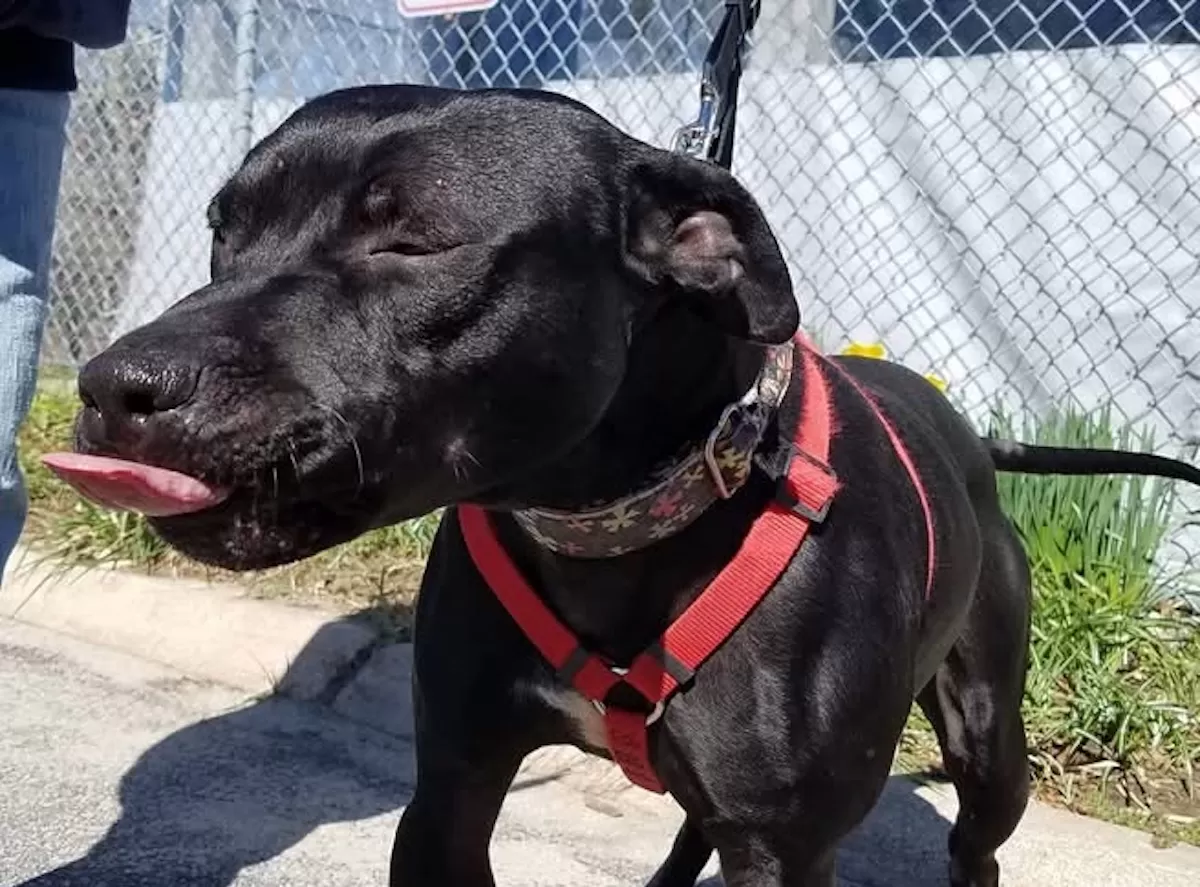
A fearful dog can turn ordinary family routines into daily negotiations. The doorbell rings and he disappears. A guest reaches down and he backs away. A walk that should clear everyone’s head becomes a tense scan for strangers, dogs, trucks, or unfamiliar noises. Fearful dog rehabilitation is not about making a dog act social on command. It is about helping him feel safe enough to move through real life with steadiness, trust, and clear direction.
That work requires more than treats tossed at a trigger or a string of cheerful commands. A fearful dog needs an owner who can recognize pressure, create structure, and stop asking the dog to solve situations he is not emotionally ready to handle.
What Fear Looks Like in Everyday Life
Fear does not always look dramatic. Some dogs shake, hide, or refuse to leave the house. Others bark hard at visitors, lunge at dogs on leash, freeze when touched, or pace whenever the family prepares to leave. Those behaviors may look like defiance or aggression, but they are often a dog's attempt to create distance from something he finds overwhelming.
This distinction matters. If an owner treats fear like stubbornness, they may add pressure at the wrong moment. If they treat every fearful reaction as something to reward away with food, the dog may become more focused on the treat than on learning how to settle himself. Neither approach gets to the real issue: the dog lacks confidence and needs dependable leadership.
Fear can also be highly specific. A dog may be relaxed with family but suspicious of men, anxious on slick floors, reactive near other dogs, or distressed when left alone. A dog adopted from a shelter may carry a history no one fully knows. Even a well-loved puppy can become fearful after limited exposure during key developmental stages, a frightening event, pain, or repeated chaotic interactions.
The goal is not to erase a dog's personality. Some dogs will always be more reserved than others. The goal is to teach the dog that he can look to his owner instead of making anxious decisions for himself.
Fearful Dog Rehabilitation Starts With Leadership
A fearful dog is already carrying too much responsibility. He is deciding whether a guest is safe, whether a noise is dangerous, whether another dog should be confronted, and whether the household can be left without him monitoring every movement. That is exhausting for a dog and disruptive for a family.
Effective rehabilitation changes that picture. The owner learns to manage the environment, control access to stressful situations, and communicate in a way the dog understands. Calm direction is not intimidation. It is the opposite of chaos. A dog gains confidence when the person at the other end of the leash is clear, composed, and consistent.
That means avoiding the two common extremes. Do not force a frightened dog into the center of a crowded gathering and call it socialization. At the same time, do not allow fear to dictate every room, doorway, walk, visitor, and family activity. Protection without progress can quietly become a smaller and smaller life.
The right pace depends on the dog. One dog may need distance from a trigger and short, successful exposures. Another may need clearer boundaries at home before public outings improve. The work should challenge the dog enough to build resilience, not overwhelm him into another setback.
Build Stability at Home Before Demanding It in Public
Many owners begin with the sidewalk because that is where the problem is most visible. But the foundation usually starts at home. If a dog is pacing, following every family member, charging the window, claiming furniture, or exploding at every sound from the hallway, he is practicing a state of constant alertness.
Before expecting a calm café patio or a relaxed neighborhood walk, establish a calmer daily rhythm. The dog should have a defined place to settle, respectful boundaries around doors and greetings, and predictable routines for movement, rest, and interaction. He should not need to patrol the house to feel in control.
At Best Buddy Dog Training, this work is organized through the P.R.I.M.E. framework: Proximity, Resources, Interactions, Movement, and Elevation. These are the daily areas where dogs often gain too much responsibility or become emotionally overinvested.
This is not about making a dog live a joyless, restricted life. It is about removing the constant decision-making that keeps an insecure dog on edge. Once the household feels organized, many fearful dogs begin to exhale.
Stop Rehearsing the Panic
Every uncontrolled reaction is practice. If a dog rushes the front window barking at passersby ten times a day, he is becoming more skilled at that behavior. If guests arrive and the dog is allowed to hide, bark, circle, and then bolt toward the doorway, the entire event confirms his belief that visitors are a crisis.
Management is not a shortcut. It is part of training. Use distance, placement, leashes, crates when appropriate, and calm routines to prevent rehearsals while new habits are being built. A dog cannot learn emotional control while repeatedly being pushed past his limit.
This does not mean isolating him forever. It means creating controlled opportunities to practice a better response. A visitor may enter while the dog remains settled at a comfortable distance. A walk may begin on a quieter street before progressing toward busier areas. A dog who fears handling may first learn to accept brief, calm touch in a low-pressure setting.
Progress is often uneven. A dog may handle a new person beautifully on Tuesday and struggle after a loud weekend or disrupted routine. That does not mean the training failed. It means the owner needs to read the dog honestly and return to the level where he can succeed.
Why Treat Dependency Can Keep Owners Stuck
Fearful dogs should not need a pocket full of treats to walk past every concern in life. If the food disappears and the dog's confidence disappears with it, the underlying problem has not been solved.
A dog also cannot eat his way out of every emotional conflict. In a serious fear response, many dogs will refuse food altogether. Others will take the treat while remaining tense, watchful, and ready to react the second the reward is gone.
Lasting change comes from a relationship in which the dog learns, through repeated experience, that he can trust his owner to handle the situation. Clear boundaries, fair correction when needed, calm praise, structured movement, and successful exposure work together. No electronic collar or food lure is required.
The Family Must Learn the Same Language
A fearful dog can make one person in the household feel like the designated handler while everyone else works around the problem. That arrangement rarely holds. Children, spouses, visitors, and caregivers all need to understand the dog's rules, his thresholds, and how to respond without adding excitement or uncertainty.
Consistency does not mean everyone must train with identical timing on day one. It means the family agrees on the basics. The dog is not allowed to rehearse barking at guests with one person and expected to settle quietly with another. He is not pulled forward on an anxious walk by one family member and asked to follow calmly by someone else.
Private in-home training is valuable because the real challenges are usually happening in the living room, at the front door, on the family's street, and around the routines no group class can fully recreate. For more serious cases, an immersive board-and-train program can provide the focused repetition and structure needed to reset unhealthy patterns before owners learn to maintain the results at home.
What Real Progress Looks Like
Real rehabilitation is not a dog suddenly becoming the life of the party. It is a dog who can see a stranger without unraveling. It is a dog who walks past another dog with guidance instead of lunging to create space. It is a dog who rests while the family eats dinner, settles when someone knocks, and recovers more quickly when something unexpected happens.
Confidence is often quiet. The best sign is not excitement. It is the absence of constant vigilance.
If your dog is fearful, do not measure success by how many people can pet him this week. Measure it by whether he can stay connected to you when life gets uncomfortable. With patient structure, honest expectations, and leadership your dog can trust, a smaller world can start becoming a calmer, more manageable one.
Who you are to your dog is EVERYTHING
Shawn Hines
Dog Trainer, Best Buddy Dog Training
Comments
You must be logged in to leave a comment.
Log In Register