by Shawn Hines • • training tips
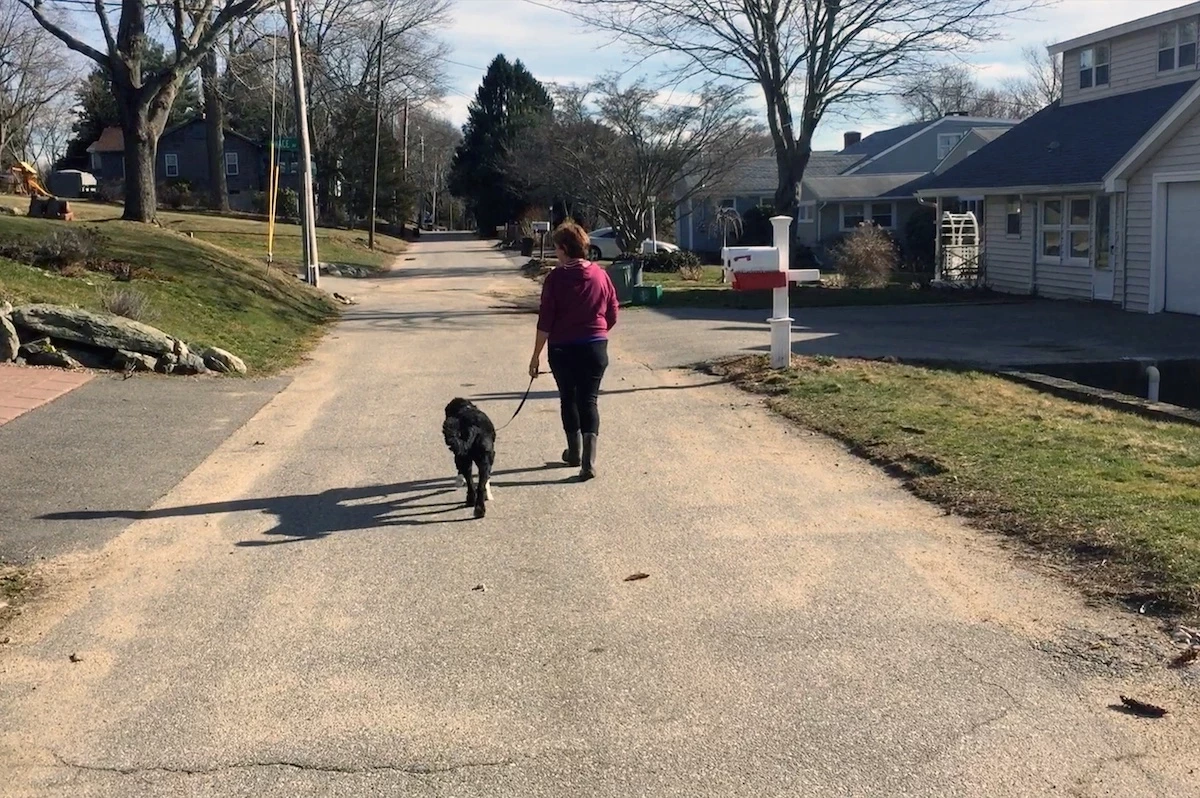
A walk should not feel like a negotiation with a dog who has decided the sidewalk belongs to him. If you are trying to stop a dog pulling on a leash, the answer is not a stronger arm, a pocket full of treats, or another piece of equipment. It is teaching your dog that calm cooperation, not forward pressure, is what moves life ahead.
Pulling is one of the most common complaints we hear from families, and it can quickly shrink a dog's world. Owners stop taking walks, avoid busy streets, and dread the simple act of getting to the car. The good news is that leash pulling is highly trainable when you address the behavior at its source rather than trying to manage it one walk at a time.
Why Dogs Pull in the First Place
Dogs pull because it works. A dog sees a squirrel, catches an interesting scent, wants to greet another dog, or simply wants to get somewhere faster. He leans into the leash, and the handler follows. From the dog's perspective, pressure on the leash has successfully opened access to the things he wants.
This does not mean your dog is bad, stubborn, or trying to dominate the household. But it does mean he has learned that his excitement gets to make decisions. Over time, that habit becomes automatic. The dog leaves the house already scanning, surging, and anticipating the next opportunity to pull.
Many well-meaning owners accidentally reinforce this pattern. They allow the dog to drag them for most of the walk, then ask for a loose leash only when another dog appears. Or they repeatedly call the dog's name and offer treats while the dog is too overstimulated to think. Food can be useful in training, but it should not become a permanent bribe that your dog needs in order to walk beside you.
A reliable walk is built on a clearer message: pulling does not create progress, and calm attention does.
Stop Dog Pulling on Leash by Changing the Rules
Before working on the sidewalk, look at the pattern inside your home. Dogs do not separate their behavior into neat categories the way people do. A dog who rushes through doorways, demands attention, drags family members to the food bowl, and ignores direction around the house is likely to bring that same impulsive mindset outdoors.
At Best Buddy Dog Training, we look at the whole relationship through P.R.I.M.E. Proximity, Resources, Interactions, Movement, and Elevation. These are everyday areas where a dog either practices self-control and cooperation or rehearses making his own rules.
For leash work, movement is especially important. Your dog should not believe he gets to launch out of the crate, charge through the front door, or set the pace the moment the leash clips on. Slow the routine down. Ask for a calm pause before the door opens. Step out first when appropriate. If your dog explodes forward, calmly reset instead of being pulled into the next phase of the walk.
This is not about turning a walk into a military drill. It is about giving an excited dog a structure he can understand. Clear expectations reduce conflict. A dog who knows that calm behavior earns access has less reason to argue with the leash.
Start Where Your Dog Can Actually Succeed
Do not begin on the busiest trail in town if your dog cannot focus in the driveway. Start in a low-distraction area where you can establish the basic picture: your dog walks with you on a loose leash, checks in regularly, and changes direction when you do.
Keep the leash short enough to communicate clearly, but not tight. Constant tension tells the dog nothing useful other than that both of you are braced against each other. Your goal is a relaxed leash and a dog who is aware of your movement.
Walk with purpose. If your dog moves ahead and creates tension, do not continue marching toward his destination. Stop, change direction, or guide him back into position with calm, timely leash communication. The exact correction depends on the dog's size, temperament, and level of arousal, but the principle stays the same: forward motion is not a reward for pulling.
The moment your dog relaxes, follows, or gives you attention, continue walking. That release of pressure and access to movement is meaningful to a dog. For many dogs, it is more relevant than waving a treat in front of their nose while they are staring at a passing jogger.
Do Not Let Every Walk Become a Heel Exercise
A common mistake is believing that a loose-leash walk means your dog must stay glued to your left leg for an hour. That is unnecessary for most family dogs. Your dog can have time to sniff, explore, and enjoy being outside, as long as he does it without dragging you and can return to a structured position when asked.
Think of it as switching between two modes. In a structured walking mode, your dog stays close, matches your pace, and follows your lead. This is useful near traffic, around people, when passing another dog, or anytime safety matters. In a release mode, he may explore within the leash boundary without forging ahead and putting pressure on the leash.
The distinction matters. If your dog is allowed to pull toward every smell, person, and patch of grass, he learns that freedom means ignoring you. If you provide freedom after calm cooperation, he learns that listening gives him access to the world.
Handle Distractions Before They Handle You
Most pulling gets worse around distractions. A dog may look wonderful on a quiet street, then turn into a freight train at the sight of another dog. That does not mean the training failed. It means the environment is asking more of your dog than he is ready to give.
Create distance early. Cross the street, turn down a driveway, or move behind a parked car before your dog locks onto the trigger. Waiting until he is barking, lunging, and standing on two legs puts you in damage-control mode. At that point, he is not learning much beyond how to rehearse the reaction again.
Keep your response calm and decisive. Repeatedly chirping your dog's name, pleading with him, or stuffing food into his face can add more frantic energy to an already charged moment. Guide him away, regain his attention, and reintroduce the challenge at a distance where he can make a better choice.
For reactive, fearful, or aggressive dogs, leash pulling is often only one part of a larger behavioral picture. These dogs need an individualized plan that builds emotional stability and handler control without flooding them with situations they cannot manage. There is no responsible one-size-fits-all fix for a dog that is exploding at the end of the leash.
Consistency Is What Makes It Last
A dog cannot understand that pulling is unacceptable on Monday but allowed when the family is late for school on Tuesday. Everyone who walks the dog needs to use the same standard. That does not mean every family member has to train exactly the same way, but everyone must agree that being pulled is not the price of getting outside.
Short, focused walks are often more productive than long walks spent practicing chaos. Five minutes of calm direction in the driveway can do more for your dog than a mile of pulling toward whatever he wants. Build duration and difficulty gradually. Add busier streets, new locations, and more distractions only after your dog can remain responsive at the previous level.
Also be honest about your own habits. If you are checking your phone, rushing ahead, or allowing the leash to stay tight for blocks at a time, your dog receives mixed information. Good leash work requires you to be present. Your dog does not need perfection from you, but he does need leadership he can rely on.
When Professional Help Is Worth It
Some dogs improve quickly once the household changes its approach. Others have months or years of pulling, reactivity, overexcitement, or anxiety behind them. A large adolescent dog can be physically dangerous when he pulls an owner into traffic or toward another dog. In those cases, generic group advice and equipment purchases are rarely enough.
Private training allows a professional to see the actual problems: the front-door routine, the family's timing, the dog's relationship with each handler, and the environments that trigger the behavior. The goal is not to create a dog who performs for a treat in a quiet room. The goal is a dog who can walk calmly past real-life distractions and return home emotionally settled.
A calm sidewalk walk is not a small luxury. It is daily proof that you and your dog can move through the world together with trust, boundaries, and less stress. Start by refusing to let pulling decide where either of you goes, then give your dog the clear, consistent guidance he has been missing.
Who you are to your dog is EVERYTHING
Shawn Hines
Dog Trainer, Best Buddy Dog Training
Comments
You must be logged in to leave a comment.
Log In Register