by Shawn Hines • • training tips
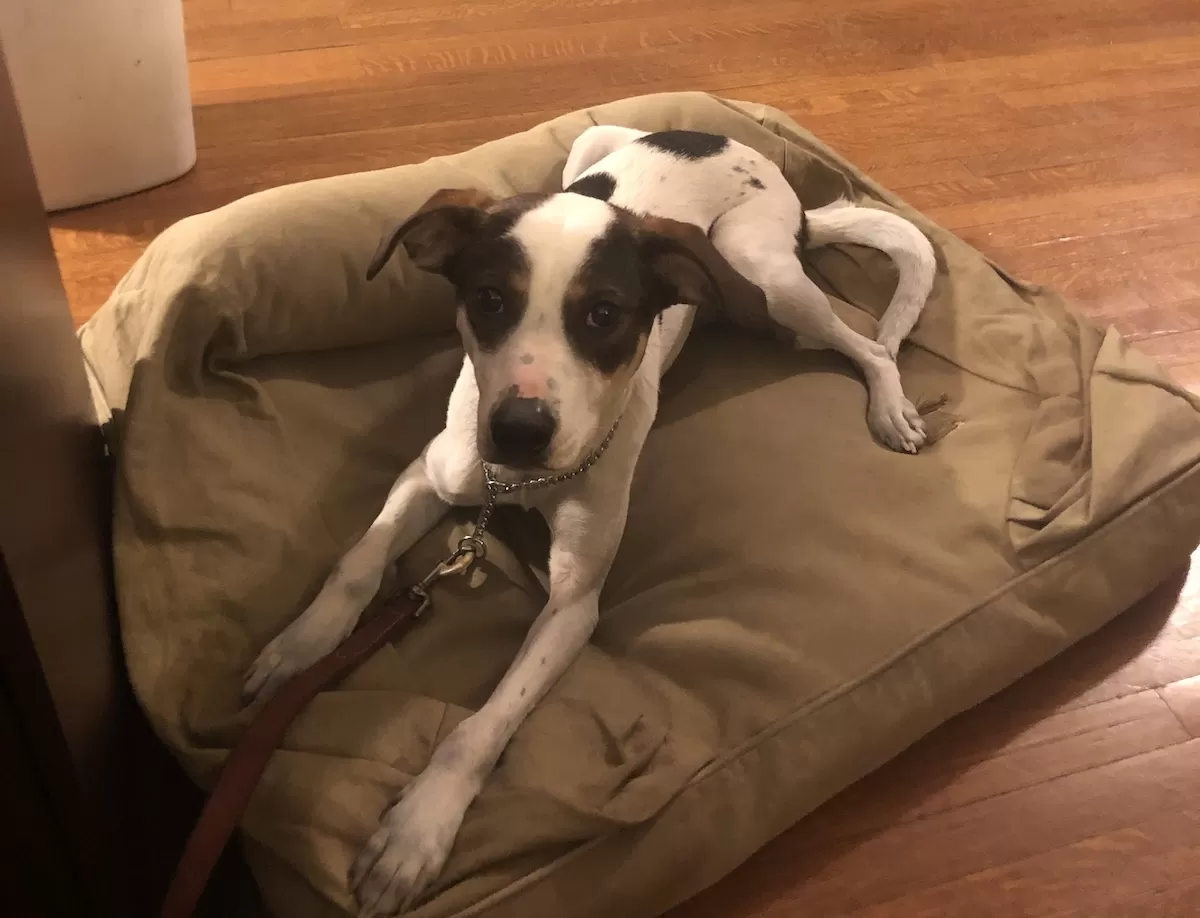
The doorbell rings, dinner is on the table, and your dog is already racing from room to room, barking, jumping, or squeezing between everyone’s feet. This is where dog place command training earns its value. It gives your dog a clear, physical job: go to a designated spot, settle there, and remain there until released.
That may sound simple, but it is not a party trick. A reliable place command changes how a dog moves through the household. Instead of managing chaos with repeated yelling, food bribery, closed doors, or a leash attached to the dog all evening, you can direct your dog to a calm station and get on with real life.
What Is Dog Place Command Training?
“Place” means going to a defined elevated cot, dog bed, mat, or platform and remaining there until you give permission to leave. The surface itself is not magic. Its purpose is to make the boundary clear enough that the dog can understand it and you can enforce it consistently.
A good place command includes more than walking onto a bed for a treat. The dog should go there when asked, stay there through normal household movement, relax while distractions happen, and wait for a release word. That last part matters. A dog that decides when the command is over has not learned obedience. He has learned that the command is optional.
For many families, place becomes the most useful command in the home because it applies to the moments that create the most friction: guests arriving, children playing, packages being delivered, cooking dinner, vacuuming, answering the door, or bringing groceries inside. It also teaches a deeper skill - emotional control.
Why a Place Command Creates Better Behavior
Dogs do not become calm simply because we ask them to be calm. They need structure they can understand, and they need repetition under the situations that normally push them into excitement, anxiety, or impulsive behavior.
The place command gives a dog a constructive alternative to unwanted behavior. Instead of charging a visitor, the dog has somewhere to go. Instead of hovering under the table, the dog has a defined boundary. Instead of barking at every movement in the front window, the dog can be sent away from the trigger and commanded to settle.
This does not mean place is a way to hide a behavior problem. If a dog is reactive, fearful, possessive, or aggressive, putting him on a cot without addressing the underlying relationship, boundaries, and handling can create a false sense of security. The command is part of the solution, not the entire solution.
At Best Buddy Dog Training, we view obedience as communication, not a collection of tricks. Place training works when the dog understands that the handler’s direction is non-negotiable. That clarity reduces pressure for many dogs. They no longer have to decide who enters the home, who gets attention, or what happens when the family is busy.
Start With a Place Your Dog Can Clearly Understand
Choose a location that gives your dog enough room to lie down comfortably but is distinct from the rest of the floor. An elevated cot is often useful because it creates a visible edge. A sturdy dog bed or mat can also work, especially for dogs that find elevated surfaces uncomfortable.
At first, keep the place in a low-distraction area. Do not begin during a birthday party, while the kids are running through the living room, or five minutes before a delivery arrives. Your dog needs to learn the meaning of the command before being expected to hold it through difficult situations.
Guide your dog onto the place, say the command once, and give him time to settle. Avoid repeating “place, place, place” until the word becomes background noise. If he steps off, quickly return him to the spot and disengage. The correction should be immediate, matter-of-fact, and proportional. Drama creates more excitement. Clear follow-through creates understanding.
Release your dog intentionally. A release word such as “free” or “break” tells the dog that the exercise has ended. Without a release, many owners accidentally teach their dog that the command ends whenever he gets bored, sees movement, or hears a sound outside.
A young puppy may need very short sessions, often just a few minutes of successful practice. An adolescent dog with poor impulse control may need more frequent repetitions and firmer follow-through. A confident adult dog may progress quickly indoors but struggle when visitors arrive. Training is not one-size-fits-all because dogs are not one-size-fits-all.
Teach Calm, Not Frozen Compliance
A dog on place does not have to stare at you like a statue. He can shift positions, lie down, rest his head, or watch the room quietly. What matters is that he maintains the boundary and remains emotionally settled.
That distinction is especially important for anxious dogs. Forcing a worried dog to endure overwhelming triggers from a place board can make the dog look obedient while pressure builds underneath. In those cases, the trainer must manage distance, control exposure, and teach the dog how to decompress. The goal is a balanced dog, not a dog that has learned to shut down.
Use Place During Real Family Life
Once the command is understood, bring it into the routines that matter. Ask your dog to go to place before opening the front door. Use it while the family eats dinner. Put the dog on place while children do homework or while you fold laundry. These are not glamorous training sessions, but they are where lasting obedience is built.
The command is also useful outside the home. A portable cot can give your dog a familiar assignment at a friend’s house, on a patio, during a child’s sports practice, or while you speak with a neighbor. Start in easy environments first. Public calm is earned through successful practice, not demanded before the dog is ready.
The Mistakes That Make Place Training Fall Apart
The most common mistake is relying on treats to hold the dog in position. Food can help introduce a new exercise, particularly with a puppy, but it should not become the reason the dog obeys. If your dog only stays because you keep feeding him, what happens when your hands are full, your guests are at the door, or you do not have a pocket full of snacks?
Another mistake is giving the command without enforcing it. Telling a dog “place” while allowing him to walk away teaches him that your words carry no weight. The answer is not harsher energy or endless repetition. It is calm follow-through every time.
Owners also tend to end the exercise too soon. The dog goes to place, receives praise, and is immediately released. That teaches the destination but not the stay. Build enough duration that remaining in place becomes normal. At Best Buddy Dog Training, thirty minutes to an hour is the standard, and usually achieved within the first few days.
When Professional Help Makes Sense
Place training can be straightforward for a stable dog with minor household manners issues. It becomes more complex when a dog guards spaces, panics when separated from the family, explodes at visitors, or cannot settle because he is constantly scanning the environment.
Those dogs need more than a command. They need a personalized plan that addresses what drives the behavior, how the household handles resources and movement, and whether family members are sending consistent signals. This is the practical value of a relationship-based framework such as P.R.I.M.E.: Proximity, Resources, Interactions, Movement, and Elevation all affect how a dog sees responsibility and boundaries in the home.
A qualified trainer should be able to show you how the place command fits your dog’s bigger behavior picture. Be cautious of anyone who promises instant control through an e-collar, a pile of treats, or a scripted class routine that never accounts for your home, your schedule, or your dog’s temperament.
A calm dog on place while the door opens, dinner is served, or children play nearby is not just convenient. It is proof that your dog can look to you for direction when life gets busy. Start with a clear boundary, follow through without emotion, and let the quiet moments become part of your family’s normal routine.
Who you are to your dog is EVERYTHING
Shawn Hines
Dog Trainer, Best Buddy Dog Training
Comments
You must be logged in to leave a comment.
Log In Register