• training tips
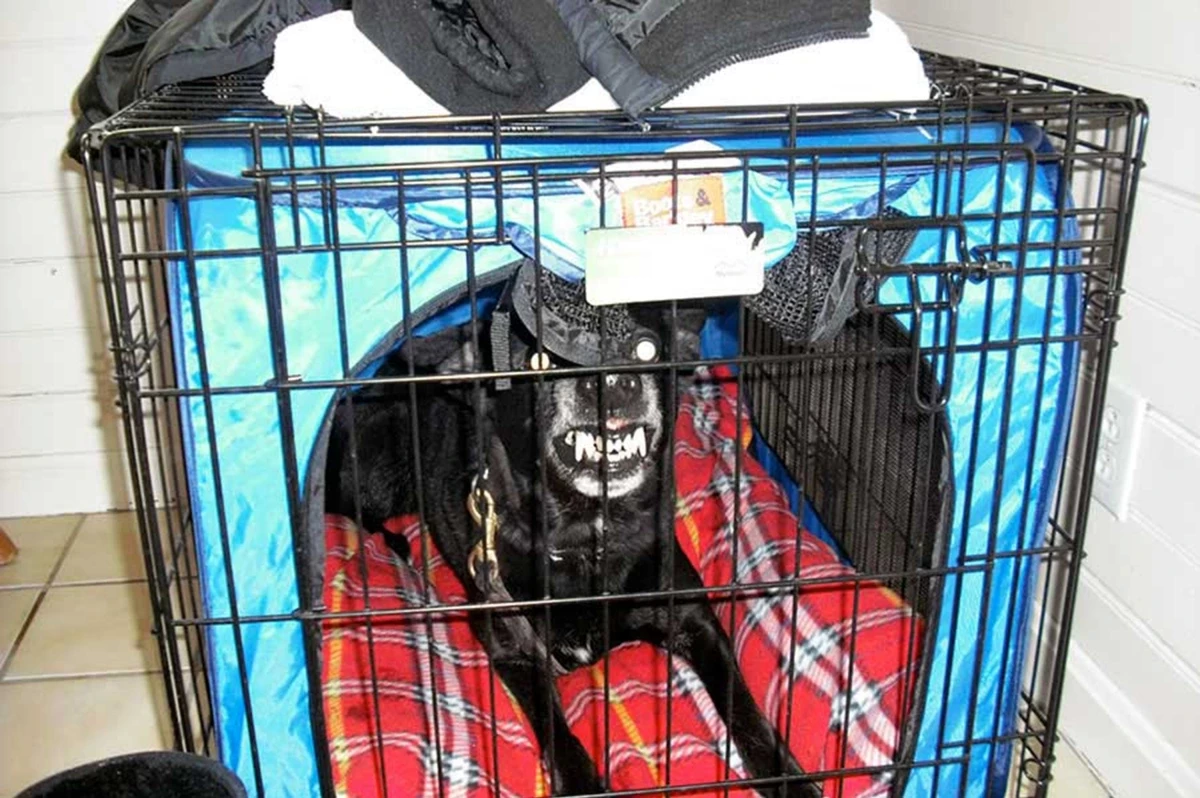
A dog that stiffens when someone reaches for the leash, explodes at the window, guards the couch, or lunges on a walk is not a dog who needs more random commands. Aggressive dog training at home begins by making daily life safer, calmer, and more predictable. It does not begin with forcing a greeting, testing your dog around triggers, or bribing your way through behavior that is already escalating.
For families, aggression is exhausting. You start planning the house around the dog: guests use a different door, children cannot play freely, walks become stressful, and every knock at the door raises the temperature. Change is possible, but it requires an honest look at the behavior, consistent household leadership, and the willingness to get hands-on help when the risk is beyond what a family should manage alone.
Start aggressive dog training at home with safety
Before trying to change behavior, stop giving the behavior opportunities to rehearse. Every successful rush at the front window, fence fight, snapped correction, or guarded item strengthens the pattern. Management is not failure. It is the first responsible step in behavior modification.
Use physical separation when visitors arrive. Put away high-value items if your dog guards food, toys, furniture, or stolen objects. Keep your dog on a leash indoors when appropriate, not to drag them around the house, but to prevent a sudden confrontation and quickly gain control when necessary. On walks, create distance early rather than waiting until your dog is staring, stiffening, and ready to lunge.
A basket muzzle, properly conditioned and fitted, can be a sensible safety tool for a dog with a bite history. It is not a cure, nor should it be used to place a dog in situations they cannot handle. It gives everyone a margin of safety while the real work happens: changing the dog’s state of mind and the patterns that have been allowed to repeat.
Identify the pattern before you try to fix it
“Aggression” describes an outcome, not a single cause. One dog may bark and lunge because strangers make them uneasy. Another may guard a bed because no one has established clear boundaries around space and resources. A third may become explosive from chronic overstimulation, leash frustration, or a history of being allowed to make every decision on walks.
Keep a simple record for a week. Note what happens before the reaction, how close the trigger is, what your dog’s body looks like, and how long recovery takes. Watch for the smaller signals that arrive before the blowup: hard staring, freezing, closed mouth, raised hackles, pacing, lip lifting, or a refusal to move away from an object.
A sudden change in behavior also deserves a veterinary conversation. Pain, vision changes, thyroid concerns, neurological issues, and other health problems can lower a dog’s tolerance dramatically. Training matters, but it should not be used to explain away a medical issue.
Know when home training is not enough
If your dog has bitten and broken skin, redirected onto a family member, targeted children, or cannot recover after seeing a trigger, do not make your living room a training experiment. The same applies when adults in the home disagree about boundaries or cannot safely handle the dog. Give Shawn at Best Buddy Dog Training a call. He'll assess the situation and build a plan around the actual risk.
Be cautious about anyone who promises to “fix” aggression in one session or insists that a few treats will solve a serious behavior problem. Lasting obedience comes from a clear relationship, consistent expectations, and a dog that can think clearly without being managed by a lure.
Build calm structure into ordinary moments
The most effective work often happens outside the obvious trigger. A dog that controls every doorway, claims every piece of furniture, pulls every walk, demands attention, and ignores direction at home is practicing a lifestyle of impulsive decision-making. That dog is less prepared to listen when something difficult appears.
Start by making your household routine more deliberate. Ask for calm before meals, before going outside, before greetings, and before access to furniture or favorite spaces. This is not about making a dog perform rituals all day. It is about teaching that access to valuable things comes through cooperation rather than pushiness, tension, or demand behavior.
At Best Buddy Dog Training, this work is organized through the P.R.I.M.E. framework: Proximity, Resources, Interactions, Movement, and Elevation. These are the areas that shape a dog’s day whether an owner realizes it or not.
Proximity means deciding when your dog is close to you and when they must give you space. A dog does not need to be underfoot, pressed against guests, or crowding family members to feel secure. Resources include food, toys, beds, doors, and attention. Calm and controlled access to these things teaches patience and reduces conflict. Interactions such as affection and play should support good behavior, correct bad behavior, and not reward frantic behavior. Movement includes walks, and moving arond and through the home. Your dog should accept your decision about whether he can move or must remain in place. Elevation addresses furniture, beds, stairs, and other spaces that may become areas of guarding or "the high ground." The rule is simple: you decide, and access is earned through calm cooperation and denied when behavior becomes possessive, disrespectful, or aggressive.None of this requires intimidation. It requires follow-through. If a rule changes depending on who is home, who is tired, or who feels guilty, the dog receives mixed information and the behavior will remain unstable.
Teach obedience that holds up under pressure
A dog with aggressive behavior needs more than a flashy sit in the kitchen. They need practical obedience that gives the owner a way to direct movement, create distance, and interrupt fixation before it becomes an outburst.
Begin in low-distraction settings. Teach your dog to come with you on leash without dragging, settle on a designated place, wait at thresholds, move off furniture when asked, and respond promptly to a simple recall. Keep your voice calm and your expectations clear. Repeating commands five times teaches a dog that the first four do not matter.
The place command is particularly useful for busy homes. It gives the dog a defined spot when the doorbell rings, meals are being prepared, children are moving around, or guests need to enter. Start by having th edog remina in place for an hour or so every day, while you go about your business in the house. For an hour or so, commit to correcting the dog whenever he leaves the designated place. The key is not to 'guard' the dog or remain hovering close by. You must disengage, but immediately correct the dog back to the spot if he moves. If you're persistent and act with urgency, your dog will soon understand and settle down. Do worry about having the dog sit or lie down. Your only focus at this stage is to get the dog to stay in place.
On walks, stop treating every outing as a social event. A dog does not need to greet other dogs or strangers to have a good life. They need a handler who notices triggers early, and get the dog's attention rather than allowing prolonged staring. Distance is your friend. Be sure you have enough distance from the triggers to handle your dog safely.
Do not confuse exposure with progress
Forcing a fearful or reactive dog closer to what worries them can make aggression worse. So can avoiding every challenge forever. The right approach is controlled exposure at a level that allows you to maintain control of your dog.
If your dog reacts to people passing the home, begin by teaching the dog to move away from the front door or window. Your goal is not to make the dog love every passerby. Your goal is to teach that they must do so peacefully or not at all.
Progress rarely moves in a straight line. A dog may improve rapidly in the house but struggle outside, or behave well with one family member and test another. That is not proof the program failed. It is proof that training must be generalized across people, places, and situations. The standard should be calm, reliable behavior in real life, not a perfect performance in a controlled session.
Give the household one clear plan
Aggressive behavior becomes more difficult when one person sets boundaries, another rewards demanding behavior, and a third avoids the dog entirely. Get the family aligned on where the dog rests, how guests enter, who handles walks, what objects are put away, and what to do when the dog begins to escalate. If you feel that the dog is too aggressive for you or your family members to handle safely, reach out to Best Buddy Dog Training and we can show you how to handle you dog in these situations, or begin your dog's training and rehabilitation in our board and train program.
Children should never be asked to correct, restrain, or "prove" the dog is safe. They need clear rules around space, food, toys, beds, and sleeping dogs. Adults are responsible for management and training.
The peaceful home you want is built through small decisions repeated every day: a calm exit through the front door, a dog resting while dinner is served, a walk without pulling or scanning for conflict, and visitors who can enter without everyone holding their breath. Start with safety, be consistent about structure, and get qualified help before a serious problem becomes a permanent part of family life.
Who you are to your dog is EVERYTHING
Shawn Hines
Dog Trainer, Best Buddy Dog Training
Comments
You must be logged in to leave a comment.
Log In Register