• training tips
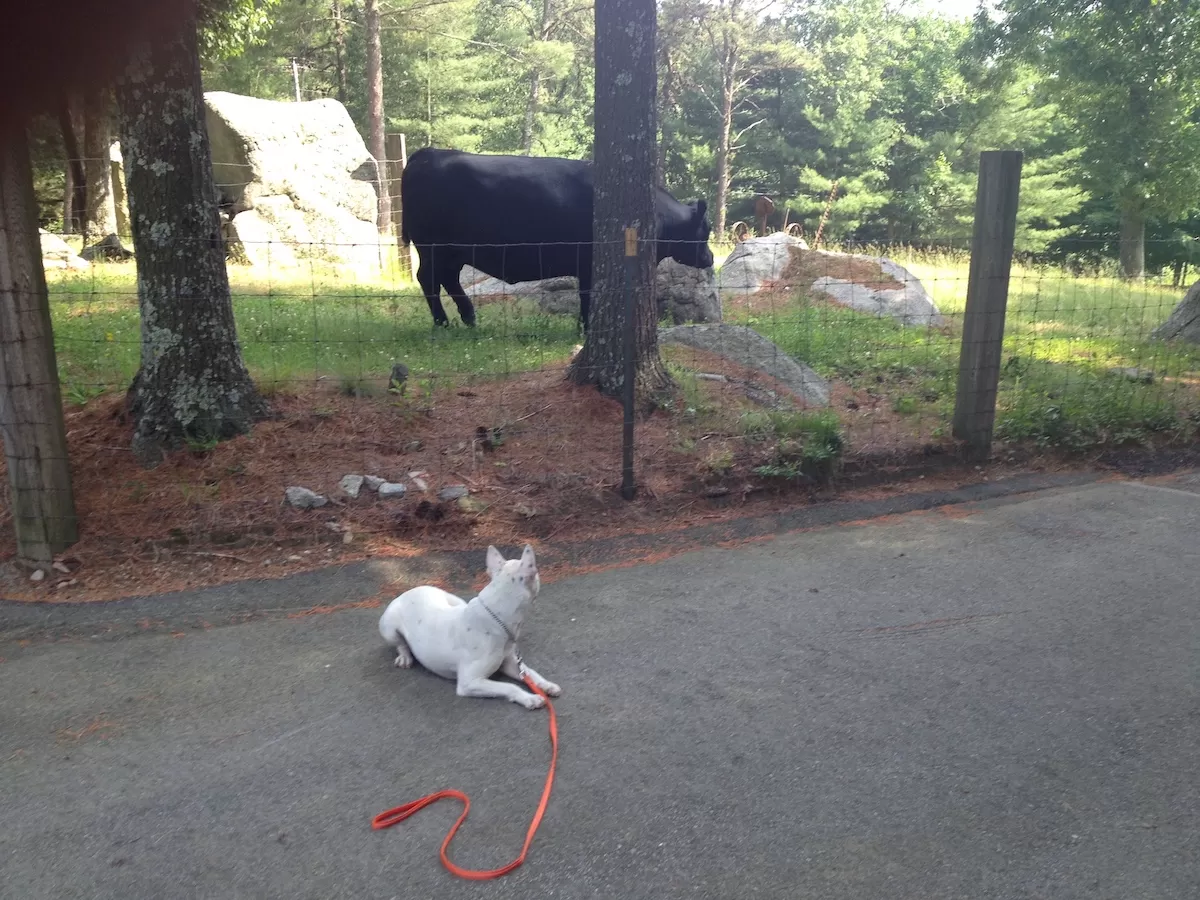
A dog erupts at the end of the leash, and the entire walk changes in seconds. Your shoulders tighten. You scan the sidewalk for other dogs, bicycles, runners, and anything that might set your dog off. Reactive dog recovery begins when the goal shifts from merely surviving those moments to building a dog who can move through real life with composure.
That distinction matters. Avoiding triggers, scattering treats, or turning away at the first sight of another dog may prevent an outburst in the moment. Sometimes that is the safest decision. But it does not automatically teach a dog how to regulate emotion, follow direction, or look to the owner for guidance when pressure appears.
Real recovery is not a trick. It is a change in the dog’s relationship with the world, with boundaries, and with the person holding the leash.
What Reactive Dog Recovery Really Means
Reactivity is not one behavior. It can look like barking, lunging, spinning, stiffening, whining, growling, or explosive pulling. Some dogs react out of fear. Others are frustrated, socially pushy, overstimulated, territorial, or accustomed to making decisions for themselves. The outward display may look similar, but the reason behind it matters.
That is why a generic class or a one-size-fits-all training plan often falls short. A fearful rescue dog needs a different conversation than a confident adolescent dog that has spent a year dragging its owner toward every dog on the block. Both need safety and fair handling. Both also need structure that is clear enough to interrupt the old pattern.
Recovery does not mean your dog must love every dog, stranger, delivery truck, or child on a scooter. That is not a realistic standard. A recovered dog can notice a trigger without losing control. They can remain connected to their handler, accept direction, and continue calmly through the environment.
For many families, the meaningful wins are simple: a quiet walk past a neighbor's dog, visitors entering without chaos, a dog resting on a café patio, or the ability to pass another dog in a narrow hallway without holding your breath.
Management Keeps Everyone Safe, but It Is Not the Finish Line
Until training is well underway, responsible management matters. Use distance. Avoid crowded routes when your dog is likely to go over threshold. Do not force greetings. Keep children and guests out of risky situations. If there is a bite history or a serious aggression concern, take precautions seriously and work with an experienced professional.
But management alone can quietly become a smaller and smaller life. Some owners end up walking at midnight, avoiding family gatherings, or keeping their dog separated whenever the doorbell rings. The household adapts around the behavior while the behavior stays in charge.
The goal is to use management as a bridge, not a permanent lifestyle. Training should gradually give you more control, more options, and more confidence. It shouldn't require carrying a pocketful of food forever or arranging every outing around whether your dog is hungry enough to listen.
Start With the Dog in Front of You
Before correcting a reactive pattern, look at the full picture. Pain, poor sleep, lack of exercise, constant stimulation, and inconsistent rules can all make a dog less stable. A sudden change in behavior deserves a conversation with your vet, especially if your dog is older or has shown signs of discomfort.
Then look honestly at daily life. Does the dog burst through doorways, patrol windows, demand attention, pull ahead on every walk, climb on furniture without invitation, or ignore direction inside the house? These details are not separate from reactivity. They often reveal a dog practicing independence and intensity from morning until night.
A dog does not become emotionally balanced only during a 30-minute training session. Recovery is shaped by thousands of small repetitions at home, in the car, at the front door, and on the sidewalk.
The P.R.I.M.E. Framework Creates Better Daily Habits
At Best Buddy Dog Training, behavior is addressed through P.R.I.M.E.: Proximity, Resources, Interactions, Movement, and Elevation. It is a practical way to examine where a dog may be taking too much control or receiving too much freedom before they have shown the ability to handle it calmly.
Addressing proximity helps the dog learn not to crowd, shadow, or control people's space. Resources include food, toys, doorways, furniture, and yard access. Interactions cover greetings, attention-seeking, and how the dog responds when people enter the home. Movement is especially important for reactive dogs because a dog that drags its owner through every walk is already rehearsing disregard for direction. Elevation addresses whether access to couches, beds, windows, or other high-value spaces is helping the dog stay settled or encouraging guarding and overstimulation.
This is not about being harsh or making a dog live without affection. It is about replacing confusion with a predictable household rhythm. Calm dogs can have plenty of freedom. First, they need to show that freedom doesn't turn into frantic behavior or poor choices.
Obedience Must Work When the Trigger Appears
A sit in the kitchen is not enough. Reactive dog recovery requires obedience that holds up when another dog appears at the end of the block or a visitor knocks at the door.
You can start by teaching commands in low-distraction settings, then build difficulty gradually. A dog should understand how to heel, stop, come when called, place, remain in position, and disengage from something interesting. These are not party tricks. They are tools to keep a dog safe and give the owner a way to lead before the dog reaches an emotional breaking point.
The timing of direction matters. Waiting until your dog is already barking, lunging, and unable to think is too late for a productive lesson. Effective handlers learn to recognize the first signs: a hard stare, ears forward, a closed mouth, shifting body weight, or increasing leash tension. Address the fixation early and calmly. Ask for a known behavior, create space when needed, and follow through.
Treats can be useful during early teaching, but they should not become the only reason a dog cooperates. A dog that performs only when food is visible has not learned dependable obedience. Likewise, equipment does not solve a relationship problem. A different collar, a stronger harness, or an electronic device may change what the owner feels in their hand, but it does not automatically teach the dog emotional control.
Clear expectations, consistent follow-through, and fair praise create more durable results.
Exposure Is Necessary, Flooding Is Not
Reactive dogs need carefully planned exposure to the things that challenge them. They do not need to be dragged into a crowded dog park, forced into greetings, or pushed so far over threshold that every outing becomes another rehearsal of panic or aggression.
The right distance depends on the dog. For one dog, success may begin from across a parking lot. For another, it may mean calmly passing a dog on the other side of a residential street. The distance can shrink as the dog proves capable of staying composed, listening, and recovering quickly.
Progress is rarely perfectly linear. A dog may do well for two weeks and have a difficult day after poor sleep, a stressful visitor, or an unusually busy environment. That does not erase the work. What matters is whether the dog returns to balance faster and whether the owner has the skills to guide that recovery.
The Owner's Consistency Changes the Outcome
Owners often ask how long recovery takes. The honest answer is that it depends on the dog's history, intensity, environment, and the consistency of the people at home. A young dog with mild leash frustration may improve quickly. A dog with a long bite history or years of rehearsed aggression requires a more deliberate process.
What cannot be skipped is owner participation. If one family member allows pulling, another rewards barking with attention, and a third avoids giving direction because they feel guilty, the dog receives mixed messages. Dogs do not need perfection from their families. They do need clarity.
Private in-home training can be especially valuable because the real problems usually happen in real places: at your front window, on your street, around your children, or when guests arrive. An immersive board-and-train program may also be the right fit when a dog needs an intensive reset, and the owner needs a strong foundation before follow-up coaching begins. The best option depends on the dog and the household, not on a canned package.
A calmer dog is not created by wishing for a better walk. It comes from daily leadership that stays steady when life gets distracting. Start with the next doorway, the next leash-up, and the next moment your dog looks to you for direction. That is where a peaceful home and a calm sidewalk walk begin.
Who you are to your dog is EVERYTHING
Shawn Hines
Dog Trainer, Best Buddy Dog Training
Comments
You must be logged in to leave a comment.
Log In Register