by Shawn Hines • • training philosophy
If you've spent any time researching dog training methods, you've probably come across terms like "counter-conditioning" and "redirecting."" These are popular approaches in modern dog training—and on the surface, they sound perfectly reasonable. But after years of working with dogs and their owners, I've come to believe there's a better way. One that respects who your dog actually is.
Good behavioral dog training, in my view, is not about tricking your dog into forgetting his natural instincts or distracting him every time something triggers a reaction. It's about teaching your dog the rules and boundaries of living in a human world—so he can control his own reactions in a way that's acceptable, safe, and honestly? More peaceful for everyone involved.
What I Don't Ask Dogs to Do—and Why It Matters
One of the things that surprises people when they start working with me is what I don't require from their dog. I think this is where my approach really sets itself apart from counter-conditioning and redirection-based methods.
I don't require dogs to be "friendly." On walks or out in public, I don't invite strangers to pet or feed my dogs—and I don't allow it, either. Instead, the dogs are simply required to leave strangers alone. And here's the thing: for a balanced dog, this is completely natural. When we're about and about, it doesn't make sense that we would interact with every passerby.
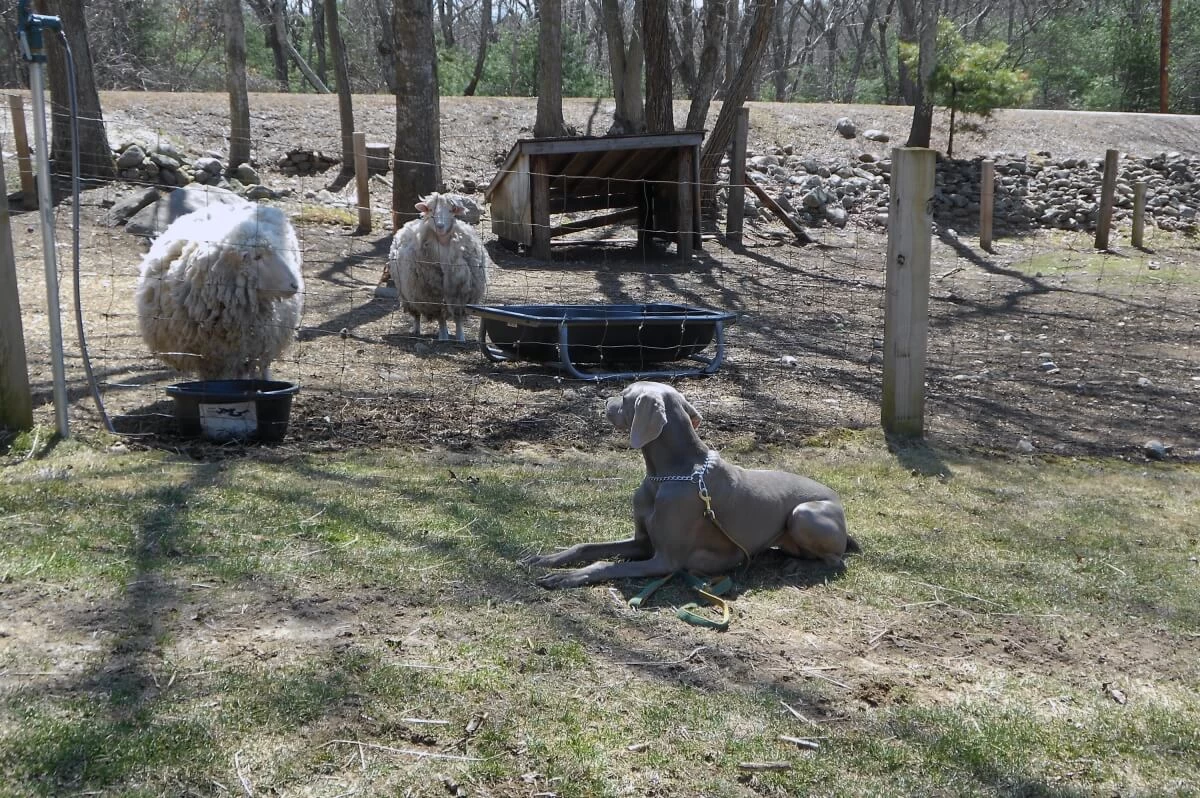
I don't require dogs to "ignore" squirrels, birds, or other dogs. Asking a dog to pretend a squirrel doesn't exist goes against his very nature. Instead, I teach dogs that these things are to be tolerated—not chased, not attacked—without my explicit permission (which, let's be honest, is almost certainly never coming). When I'm the leader and the dog understands his role as a follower, peaceful coexistence comes naturally.
I don't require or allow dogs to be outgoing with house guests. When someone visits my home, my dogs understand that this person is my guest. Their job is to leave the visitor alone unless I say otherwise. A balanced dog understands that happiness and wellbeing come from being peaceful and cooperative—not from bowling over every new person who walks through the door.
The Problem with Counter-Conditioning and Redirecting
So much of what passes for "modern" dog training is built around counter-conditioning—trying to change a dog's emotional response to a trigger—or redirecting, which essentially means distracting the dog away from a natural behavior and toward something you'd prefer.
I understand the appeal. These methods sound gentle and positive. But in my experience, they're built on a faulty foundation. Dogs don't learn this way from each other. A mother dog doesn't counter-condition her puppies. She doesn't wave a treat in front of them to distract them from doing something inappropriate. She sets a boundary, clearly and calmly, and the puppy learns. That's how dogs are wired to understand the world.
When we try to override natural behavior through distraction or emotional manipulation, we're working against the dog's nature rather than with it. And in many cases, the underlying issue—whether it's reactivity, anxiety, or over-arousal—never truly gets resolved. It just gets managed, often with diminishing returns over time.
A Better Approach: Respect the Dog, Teach Self-Control
I believe a better approach is to respect your dog's nature and teach him to control it in a way that's acceptable, logical, and safe. That means acknowledging that your dog has instincts—prey drive, territorial awareness, social preferences—and instead of trying to suppress or trick those instincts away, we channel them through clear leadership and boundaries.
This isn't about being harsh or domineering. It's about being honest with your dog (and yourself). It's about saying, "I see you. I understand what you want to do. But here's what I need from you instead"—and having the relationship and trust in place so your dog is willing to comply.
The result? A dog that's genuinely calm and balanced—not just distracted. A dog that can walk past another dog on the sidewalk without a meltdown, not because he's been conditioned to look at you for a treat, but because he trusts your leadership and knows the rules.
Let Your Dog Be a Dog
At the end of the day, I like dogs. I want them to be happy, well-balanced, and confident. I want them to be dogs—not robots performing tricks in exchange for treats, and not anxious animals whose natural instincts are constantly being suppressed or redirected.
When you train with respect for who your dog truly is, you build something that counter-conditioning and redirecting alone can never achieve: a genuine partnership built on mutual trust, clear communication, and a shared understanding of how the world works.
That's what real training looks like. And it starts with leadership.
Who you are to your dog is EVERYTHING
Shawn Hines
Dog Trainer, Best Buddy Dog Training
Comments
You must be logged in to leave a comment.
Log In Register