• training tips
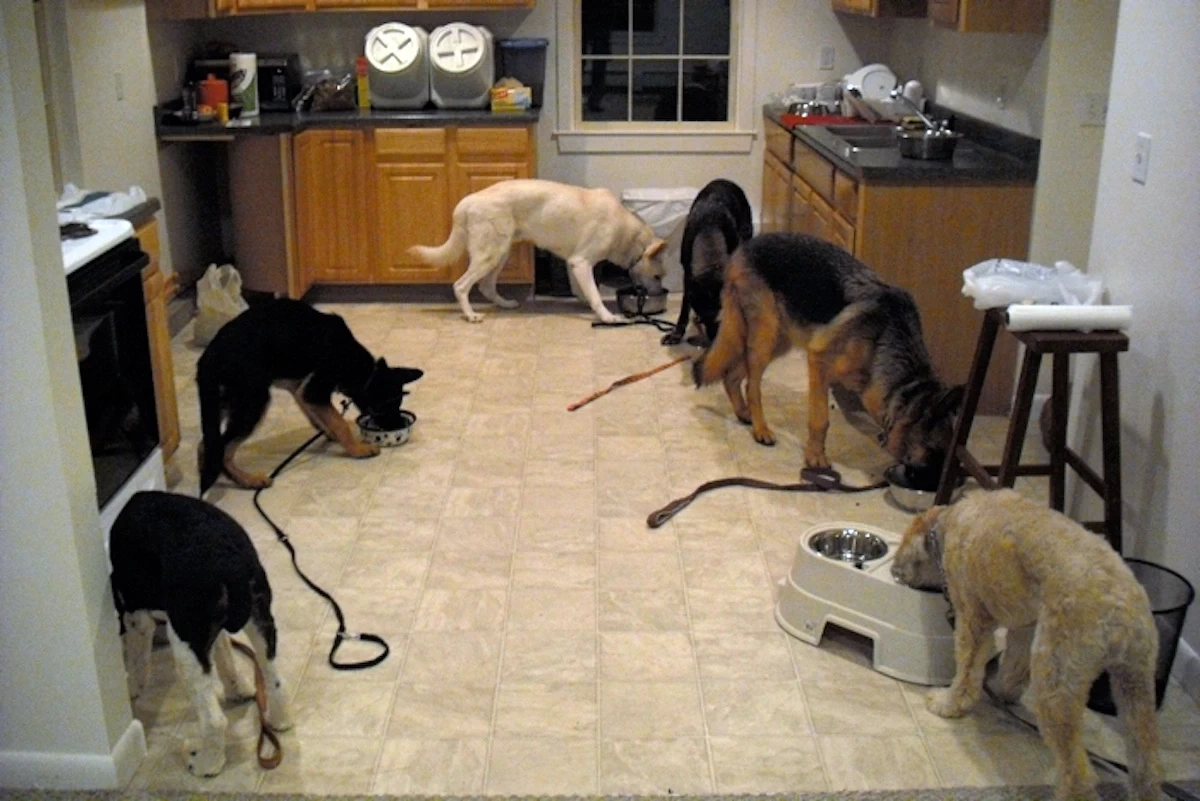
A dog freezes over a food bowl. A puppy races under the table with a stolen sock. An adult dog growls when someone reaches toward the couch. These are not small manners problems to ignore, and they are not solved by simply proving that you can take something away. Effective resource guarding training changes the pattern behind the behavior so your dog can live safely and calmly within the family.
Resource guarding can involve food, bones, toys, resting places, furniture, laundry, stolen objects, or even a favorite person. The common thread is simple: the dog believes they must control access to something valuable. That belief may show up as hovering, hard staring, body stiffening, running away with an item, growling, snapping, or biting.
The goal is not to create a dog who tolerates endless handling or who has no boundaries. The goal is a dog who understands that people in the home provide guidance, manage resources fairly, and do not need to be challenged over everyday objects.
Why Resource Guarding Starts
Guarding is often misunderstood as a dog being "dominant" or spiteful. In reality, it is often rooted in insecurity, habit, conflict, or a dog learning that people approaching means something good disappears. Some dogs come from competitive litters or uncertain early environments. Others develop the behavior after repeated chasing, grabbing, prying open their mouths, or allowing them to claim household spaces and valuables without consistent rules.
Temperament matters, but so does the household. A busy home with children dropping snacks, guests coming and going, and several pets sharing tight quarters creates more opportunities for conflict. An adolescent dog that gets away with stealing shoes every day is practicing a behavior that becomes more serious over time.
This is why one-size-fits-all advice is often weak. Tossing treats near a bowl may help in a narrow exercise, but it does not automatically change a dog's broader view of leadership, access, boundaries, or family interaction. On the other hand, confronting a worried dog or forcibly removing an item can make the next warning faster and more severe. Good training must address the whole picture.
What Not to Do When Your Dog Guards
If your dog is growling over an item, do not punish the growl. A growl is valuable communication. If you teach a dog that warning is forbidden while leaving the underlying discomfort intact, you may create a dog that skips straight to a bite.
Do not test your dog by repeatedly touching the bowl, taking toys for no reason, or having children approach while the dog eats. This is not respect training. It is unnecessary pressure, and it gives the dog more reasons to defend the item.
Chasing a dog that has grabbed something is another common mistake. It generally raises arousal, and can corner the dog into making a defensive choice. Instead, use calm management. Keep dangerous items out of reach, separate dogs during meals until they are trained to eat together don't leave food, chews, or toys laying around for the dog to access freely.
For a dog with a bite history, repeated snapping, or guarding that involves children, do not attempt to solve the issue through internet drills. Put safety first. Create distance, use gates and separation where needed, and work with an experienced behavior professional who can assess the dog in the actual home environment.
Resource Guarding Training Begins With Structure
Before working around a guarded item, the dog needs a more balanced daily life. That means clear routines, supervised freedom, calm transitions, and dependable obedience that functions when there is real distraction. A dog that ignores direction everywhere else is unlikely to make good choices when a steak bone, couch, or child's toy is involved.
At Best Buddy Dog Training, this work is viewed through the P.R.I.M.E. framework: Proximity, Resources, Interactions, Movement, and Elevation. Those five areas reveal where a dog has too much pressure, too much freedom, or too little clarity.
Proximity means paying attention to where the dog places themselves. A dog that crowds family members, blocks hallways, or plants themselves against a food-prep area may be practicing control before food ever reaches the floor. Resources include meals, toys, furniture, attention, and access to rooms. Interactions cover how family members greet, correct, play with, and handle the dog. Movement involves, among other things, the dog's ability to follow direction on leash and through the home. Elevation addresses furniture and other spaces a dog may begin to treat as personally owned.
None of this means a dog can never enjoy a bed, a toy, or a couch. It means access should be intentional, not assumed. Structure removes daily ambiguity, and that clarity is often a major relief for a dog that feels responsible for controlling everything around them.
Build obedience away from the trigger first
Resource guarding training should not begin with someone reaching toward the bowl. Start in low-pressure moments. Teach and reinforce a reliable recall, place command, leash guidance, waiting at thresholds, and the ability to move away from something when asked. These skills give the owner a practical way to direct the dog without physical wrestling or emotional bargaining.
The standard is calm cooperation, not command performance for a cookie. Food can have a place in early learning, but a dog should not require a visible treat to respond to a familiar instruction. Real life does not pause while you search for a snack. Your dog needs to understand the request, respect it, and follow through because the relationship is clear.
Change the approach to valuable items
Once the dog has a foundation of structure and safety, controlled work can begin at a distance that keeps the dog relaxed. The handler's approach should predict calm guidance, not conflict or theft. Depending on the dog, this may include teaching the dog to move away from an item on cue, calling the dog out of a space before managing the item, or practicing exchanges that do not create frantic negotiation.
The details matter. A dog guarding a bowl may need a different plan than a dog guarding a parent on the couch. A dog that runs away with socks is not automatically at the same risk level as a dog that freezes, growls, and bites over food. The right distance, pace, and level of control depend on the dog's history and the household's safety needs.
For many families, feeding separately and picking up bowls after meals is sensible management during training. If there are multiple dogs, do not ask them to "work it out." Peaceful feeding routines are not dramatic, but they prevent rehearsals of conflict.
The Family Must Follow the Same Rules
A training plan fails when one person asks the dog to get off the couch, another laughs when the dog guards a pillow, and a third tries to take items by force. Dogs notice inconsistency quickly. They may listen to the person who provides direction and challenge the person who does not.
Every adult should know how to manage the dog around food, toys, furniture, doors, and guests. Children need simple safety rules: leave the dog alone while eating or chewing, do not climb on or hug a resting dog, and get an adult if the dog has something they should not have. This is not about making children afraid of the dog. It teaches them to read space and avoid preventable conflict.
Consistency also means avoiding accidental rewards. If your dog steals a remote and the entire family chases them, the dog has gained attention, movement, and excitement. A calm, practiced response is far more effective. Prevention is not surrender. It is intelligent training.
When Guarding Needs Professional Help
Some guarding is mild and newly developed. Some is dangerous. The line is crossed when a dog has bitten, made contact with teeth, guards multiple resources, guards a person, behaves differently around children, or becomes stiff and unpredictable with little warning. Large dogs and powerful breeds require even more care because a single mistake can carry serious consequences.
Private in-home training is especially valuable here because the problem is rarely happening in a neutral classroom. It happens by the kitchen island, beside a child's backpack, near the family sofa, or during the evening rush. A qualified trainer can observe the dog's body language, identify the routines feeding the problem, and give every family member a plan they can actually use.
A calmer home does not come from winning an argument with your dog over a bone. It comes from consistent leadership, safer routines, and a dog who no longer feels the need to control the people and resources around them. If tension around food, furniture, or stolen items is changing how your family lives, getting clear, hands-on guidance early can protect both your dog and the people they love.
Who you are to your dog is EVERYTHING
Shawn Hines
Dog Trainer, Best Buddy Dog Training
Comments
You must be logged in to leave a comment.
Log In Register