• training tips
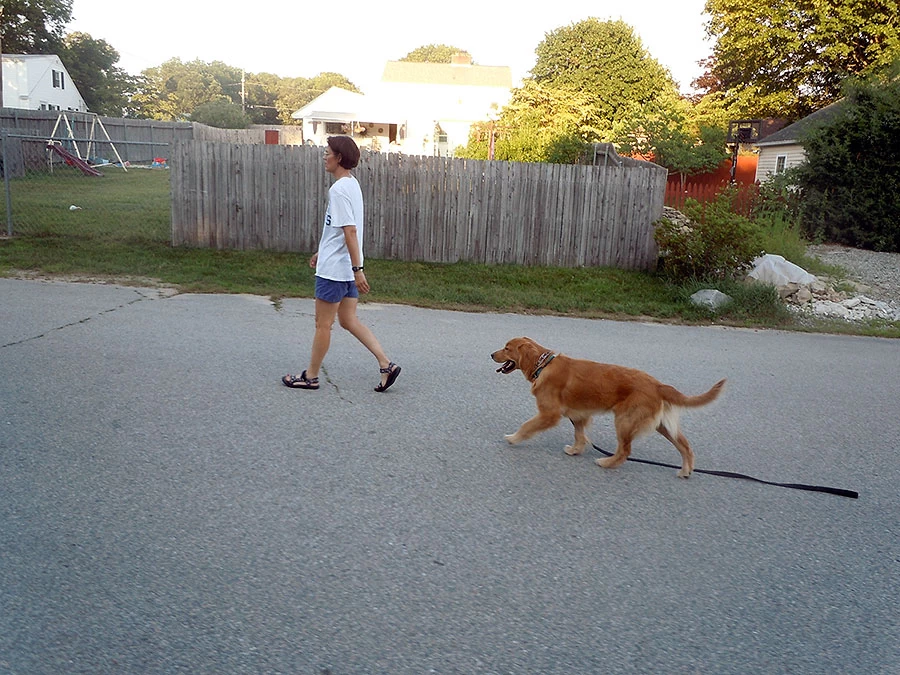
Being calm and assertive with your dog is one of the greatest gifts you can give them. It creates clarity. It builds trust. And it prevents small issues from turning into big ones.
In dog training, we often say that dogs don't need intensity — they need consistency. They don't need anger — they need guidance. Calm assertiveness is the combination of emotional control and clear follow-through. It allows you to communicate in a way your dog truly understands.
Dogs are constantly reading us. They notice posture, breathing, tone, movement, and timing. They do not analyze our words the way people do. If you hesitate, they feel it. If you're unsure, they sense it. If you're frustrated, they react to that too.
Your internal state matters
When you're calm, your movements are more confident. Your timing is better. Your communication is clearer. When you're assertive, you follow through. You don't repeat commands endlessly. You don't hope the problem fixes itself. You take fair, immediate action.
Timing is everything
If your dog jumps on a guest and you respond ten seconds later, the moment has passed. If your dog pulls toward another dog and you allow several steps before intervening, you've already reinforced the pulling. Dogs learn mostly from what happens immediately after a behavior. Still, don't ignore unwelcome behavior just because you fear you've missed the moment.
Procrastination is one of the biggest obstacles to good training. Most owners don't delay on purpose. Sometimes they feel unsure about what to do. Sometimes they don't want to seem "mean." Sometimes they hope the behavior will stop on its own.
But when action is delayed, frustration builds. The dog continues the unwanted behavior. The owner becomes more irritated. Eventually, instead of a calm correction, there's an emotional reaction. Now the feedback is late, charged with frustration, and confusing to the dog. This is where relationships can begin to strain.
Frustration can move in both directions. An overwhelmed owner may raise their voice or overcorrect. A confused dog may escalate, ignore commands, or become reactive. The root problem is usually not the behavior itself — it's the lack of clear, immediate communication. Calm assertiveness prevents this cycle. What does calm assertiveness look like? Imagine your dog breaks a sit and starts walking toward the door. A calm, firm response is simple: quickly stop the movement and sternly send your dog back to position. No lecture. No anger. Just follow through. The message is clear: the command still matters.
Consistency and Assertiveness
Dogs thrive when the rules are predictable and clear. If a boundary is enforced one day but ignored the next, confusion sets in. Inconsistent leadership can create anxiety because the dog never knows what to expect. When expectations are steady and fairly enforced every time, dogs (and their humans) relax.
Calm assertiveness also involves using your body effectively. Dogs understand spatial pressure and movement far better than raised voices. Stepping into a dog's space to block forward motion can be more powerful than saying "No" repeatedly. Guiding with the leash or quickly repositioning your dog communicates clearly without emotional escalation.
Physical interaction as Guidance
In balanced training, corrections — when appropriate — are simply information. They say, "That choice wasn't correct."
Many behavioral issues begin as small habits that weren't addressed early. Pulling on a leash. Jumping. Barking at passing distractions. Counter surfing. If these behaviors are corrected immediately and consistently, they're usually easy to reshape. If they're ignored for months, they become ingrained habits that take longer and more persistence to change.
Immediate action doesn't mean emotional reaction.
There's an important difference between reacting and responding. Reaction is driven by frustration. Response is driven by purpose. A calm, assertive handler responds. The dog lunges — the handler corrects. The dog ignores a command — the handler reinforces it. The dog tests a boundary — the handler enforces it. No drama. Just clarity.
Persistence is part of this mindset. If you command a sit, you confidently follow through until you get one. Not eventually. Not after repeating the cue five times. You guide your dog to success. That consistency teaches that commands matter.
At the same time, fairness is essential. Balanced training always begins with instruction. Once the dog understands, then consistency becomes the expectation. That doesn't mean you should ignore unwelcome behaviors because the dog hasn't been "taught" not to do them. It means you should teach the right behavior while also consistently correcting the wrong one. The key is to be clear about what you want while also addressing what you don't want in the moment.
Accountability actually builds confidence.
When dogs understand exactly how to succeed, their stress decreases. Clear boundaries make life simpler. They don't have to guess what's allowed. They know. Your emotional control is equally important. If you approach training already irritated, your tone sharpens and your body stiffens. Dogs feel that instantly, and they will not trust you.
When owners adopt a calm, assertive mindset, obedience improves — but so does the relationship. Dogs trust leaders who are steady. Owners feel more confident when they know how to address problems immediately instead of letting them pile up.
Structure and affection are not opposites. In fact, they work beautifully together. When boundaries are clear, affection becomes more meaningful because it isn't mixed with confusion. Immediate action protects the bond between you and your dog. If pulling, jumping, or ignoring commands happens daily without appropriate action, resentment can quietly build. But when you calmly address issues as they happen, frustration doesn't have time to grow. The environment stays balanced and fair.
It's all about being clear. It's about replacing hesitation with confident assertion. It's about choosing response over reaction and consistency over emotion.
When you remain calm, consistent, and assertive, your dog understands you. When your dog understands you, they can trust you. And when trust is present, training becomes less stressful and far more rewarding for both of you.
Clarity creates confidence. Consistency creates reliability. And calm, assertive leadership creates harmony. That's the foundation of a strong, healthy relationship with your dog.
Who you are to your dog is EVERYTHING
Shawn Hines
Dog Trainer, Best Buddy Dog Training
Comments
You must be logged in to leave a comment.
Log In Register