by Shawn Hines • • in home
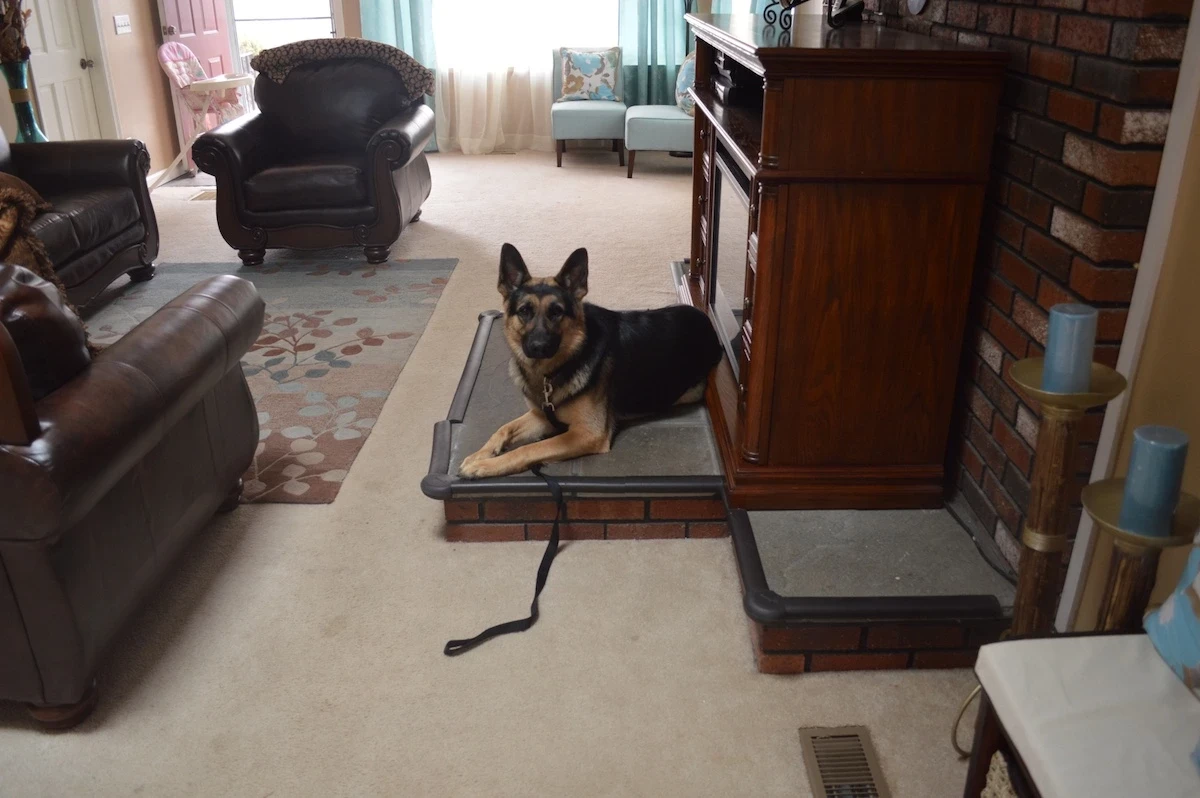
A dog who listens perfectly in a training facility but drags you down your own sidewalk has not been trained for the life you actually live. Private in home dog training takes place where the problems happen: at the front door when guests arrive, in the kitchen during dinner, on the couch, in the yard, and on the walk around your neighborhood.
That setting matters. Your dog does not experience life in a vacuum, and neither do you. The kids come home loud. The delivery driver rings the bell. Another dog appears around the corner. A real training plan has to account for those moments, not avoid them.
Why the Home Is the Right Place to Start
Most unwanted behavior is connected to a dog's daily environment. Pulling may begin the second the leash comes out. Barking may be aimed at the windows. Jumping may happen when family members return from work. Separation anxiety may build around the same departure routine every morning.
A group class can teach a few commands in a controlled room, but it cannot see the household patterns that keep behavior alive. It cannot watch how your dog claims the hallway, follows every family member from room to room, reacts to the doorbell, or becomes overstimulated before a walk. Those details are not minor. They are often the entire issue.
Private work allows the trainer to assess the dog, the people, the routines, and the physical space together. That means the plan is built around your actual life rather than a generic sequence of exercises designed for a room full of unrelated dogs.
For busy families, this is also more practical. You do not need to load an already difficult dog into the car, manage a stressful class environment, and hope the lesson transfers home later. Training begins in the place where your dog needs to make better choices.
What Private In Home Dog Training Should Address
Good training is more than asking a dog to sit for a treat. A dog can know "sit" and still panic when left alone, lunge at another dog, ignore a recall, or turn every visitor into a chaotic event. The goal is a calm, cooperative dog who can handle normal life with clear guidance from the family.
For puppies, that often means housebreaking, crate routines, chewing prevention, boundaries, social exposure, and early leash skills. Puppyhood is the easiest time to establish habits that prevent bigger problems later. It is also the time when inconsistent freedom and constant negotiation can create a demanding adolescent dog.
For adult dogs, the work may focus on leash pulling, jumping, excessive barking, door rushing, recall, reactivity, resource guarding, anxiety, or aggression. These behaviors do not all have the same cause, so they should not receive the same canned solution.
A fearful dog needs a different plan than a pushy, overconfident dog. A dog that barks from frustration needs different handling than one that barks from genuine insecurity. The right trainer does not label every difficult dog as "aggressive," then hand the owner a tool and call it a program.
Training the Family, Not Just the Dog
The dog is only part of the equation. Families need to understand what they are asking, how to follow through, and which everyday interactions either support or weaken the training.
That does not mean turning your home into a boot camp. It means replacing confusion with consistent expectations. Dogs settle when the rules are clear. They do not need endless commands, constant food, or emotional bargaining from the people around them.
A skilled trainer should show every adult how to handle the dog and explain age-appropriate roles for children. The result is not one person who can control the dog while everyone else struggles. It is a household that knows how to maintain calm behavior long after the formal sessions end.
The Difference Between Bribery and Reliable Obedience
Treats can be useful, sometimes. For example, early puppy exposure and teaching a new skill. But treat dependency is not reliability. If your dog will only come when you are holding chicken, only walk politely when food is visible, or ignores you when a stronger distraction appears, the food is doing the work.
Real-world obedience requires a relationship in which the dog understands direction, respects boundaries, and can move through excitement without becoming consumed by it. That is especially important around traffic, children, wildlife, visitors, and other dogs.
At Best Buddy Dog Training, the focus is on trust, respect, structure, and clear communication rather than e-collars, equipment-driven compliance, or keeping a treat pouch permanently attached to your hip. The P.R.I.M.E. framework looks at Proximity, Resources, Interactions, Movement, and Elevation - the daily areas that shape a dog's mindset and behavior.
For example, a dog that constantly shadows its owner, controls access to furniture, erupts at every household arrival, pulls ahead on walks, and becomes elevated by every small trigger is not simply "high energy." That dog needs better structure across the day. Addressing only the barking or pulling misses the pattern underneath it.
What Progress Looks Like in Real Life
Progress is not always dramatic on day one. A dog with years of rehearsed behavior may need time to learn a new way of responding. Owners also need practice. The difference is that private training gives you a clear path, direct feedback, and measurable goals instead of vague advice to "be consistent."
Early progress may look like a dog waiting calmly while the leash goes on, settling on a designated place while dinner is prepared, or walking past a neighbor without exploding at the end of the leash. Those moments build on one another.
Over time, the goal becomes a life with more freedom and less management. You can answer the door without grabbing your dog by the collar. You can take a calm sidewalk walk instead of bracing for a fight. You can enjoy a café patio, family gathering, or backyard without constantly scanning for the next problem.
Off-leash reliability can also be a realistic goal for many dogs, but it must be earned through foundational obedience and responsible progression. It is not a trick a trainer installs in an afternoon. A dog should demonstrate composure, responsiveness, and respect for direction before being given greater freedom.
When Private Training Is Not Enough by Itself
In-home sessions are highly effective for many households, but some cases benefit from a more immersive program. Dogs with serious reactivity, aggression, deeply ingrained habits, or owners who need faster change may require a structured board-and-train stay followed by in-home transfer sessions.
That is not a shortcut around owner involvement. No program can succeed if the dog returns to the same unclear rules and uncontrolled routines. Residential training can create a strong foundation, while follow-up work teaches the family how to preserve it in the home.
The right option depends on the dog's behavior, the severity of the issue, your schedule, and how much hands-on support your family needs. Be wary of anyone who promises the same package for every dog before asking meaningful questions. Behavior modification is not a one-size-fits-all service.
Choosing a Trainer Who Can Deliver Results
Credentials and polished social media clips do not automatically prove a trainer can resolve real behavior problems. Ask how the trainer handles reactivity, anxiety, and aggression. Ask what the owner will need to do between sessions. Ask how follow-up support works.
Watch for clear answers. A qualified professional should be able to explain the process without hiding behind theory, buzzwords, or promises that sound too easy to be true. They should also be honest about safety, timelines, and the work required from everyone in the home.
Private in-home training is an investment in the rhythm of your family's day. The best result is not a dog who performs for a trainer. It is the quiet confidence of knowing your dog can be included in your life, guided through challenges, and trusted to make better choices when it matters.
Who you are to your dog is EVERYTHING
Shawn Hines
Dog Trainer, Best Buddy Dog Training
Comments
You must be logged in to leave a comment.
Log In Register