• training tips
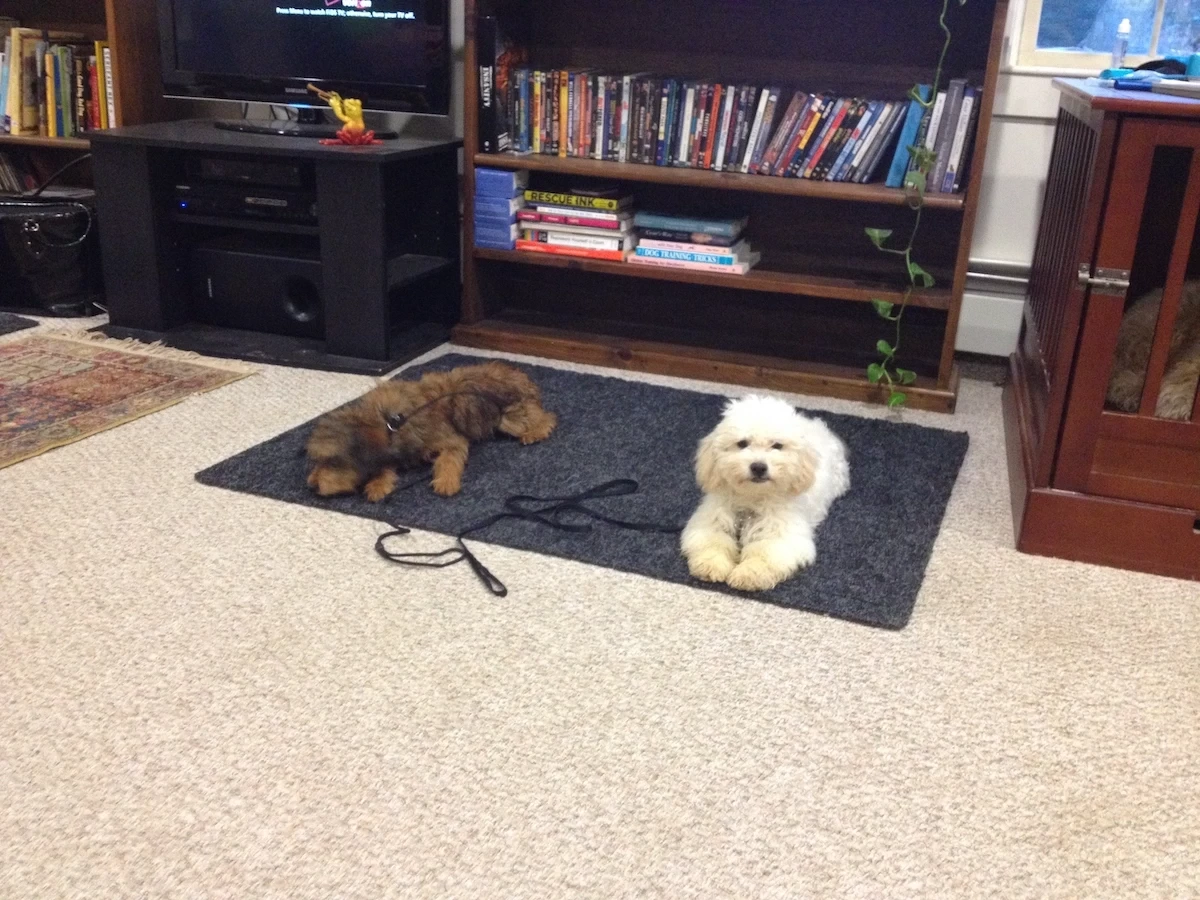
A puppy who happily greets every stranger, dog, child, bicycle, and noise may look socialized. Often, that puppy is simply overstimulated. Real puppy socialization training is not a campaign to make your dog interact with everything in sight. It is the process of teaching your puppy to remain calm, respectful, and responsive while life happens around them.
That distinction matters when you picture the dog you want to live with a year from now: quiet while guests arrive, composed at the veterinarian, steady on a sidewalk, and able to settle at a family gathering without demanding attention or creating chaos. Those outcomes do not come from puppy playdates alone. They come from exposure paired with structure, leadership, and clear expectations.
What Puppy Socialization Training Should Actually Teach
The socialization window is most influential during the early months of a puppy's life, but it is not a race to collect experiences. A puppy does not need to meet 100 people or play with every dog at the park. Flooding a young dog with uncontrolled activity can create the opposite of confidence: overexcitement, fear, frustration, or the belief that every passing person and dog is there for them.
A well-socialized puppy learns that unfamiliar things are normal and that their owner will handle the situation. They can notice a jogger without dragging toward them, hear a delivery truck without spiraling into barking, and pass another dog without needing to greet it. This is emotional balance, not social frenzy.
The goal is also not to bribe your puppy through every new situation. Treats can be useful in limited moments, but a dog raised to look for food before responding has not necessarily learned how to make good choices when food is absent. Lasting obedience is built through a relationship in which the dog understands boundaries, respects guidance, and can relax because someone else is in charge.
Start With Calm Exposure, Not Forced Interaction
Your puppy should experience the real world, but exposure needs to match the puppy in front of you. A confident, curious puppy can handle more activity than a cautious puppy who freezes, hides, or becomes frantic. Pushing either one too far is not productive.
Begin at a distance where your puppy can observe without losing their ability to listen. Sit outside a coffee shop, watch children play from across the street, or stand near a parking lot where cars and carts create movement and sound. Ask for a simple position, such as sitting beside you or settling at your feet, then reward calmness with quiet praise, forward movement, or the opportunity to continue exploring.
If your puppy stares, pulls, barks, jumps, or ignores you completely, the environment is likely too difficult at that moment. Create more distance, shorten the session, and regain composure before trying again. Socialization should build confidence, not rehearse bad habits.
Puppy classes and carefully selected play sessions can have a place, especially for dogs that need to learn appropriate canine communication. But play is not a substitute for training. An uncontrolled group of puppies teaches many young dogs that other dogs are the greatest event in the room. That may seem harmless at 12 weeks old, then turn into pulling, whining, lunging, and selective hearing by adolescence.
Teach Your Puppy That You Matter Outdoors
A puppy's ability to stay connected to you should not disappear the moment a distraction appears. This is where many owners get stuck. At home, the puppy can sit and come when called. Outside, they become a different dog.
Rather than repeating commands louder and louder, work on the relationship that supports those commands. Your puppy should learn to move with you, respect leash pressure without fighting it, and understand that rushing ahead, jumping on strangers, or dragging toward dogs does not lead to access. Calm cooperation does.
Best Buddy Dog Training uses the P.R.I.M.E. framework to help owners create that clarity in everyday life: Proximity, Resources, Interactions, Movement, and Elevation. In practical terms, that means paying attention to where your puppy is in relation to you, how food and toys are managed, who initiates attention, how movement is directed, and whether your puppy is being invited onto furniture or given unearned control of important spaces.
These details may sound small, but puppies learn from repetition. A dog who routinely shoves past people at doorways, claims the couch, demands play, and pulls from one interesting smell to the next is practicing independence and impulsiveness all day. A dog who learns to wait, follow direction, and settle is developing the habits that make socialization productive.
Make Everyday Situations Part of the Training
The strongest socialization plan is usually not complicated. It is consistent. Brief, successful sessions woven into normal family life are more valuable than one overwhelming Saturday outing.
Use ordinary moments to expose your puppy to new surfaces, sounds, people, and routines. Walk through a quiet downtown area, sit near a school pickup line from a respectful distance, visit a pet-friendly business without allowing a greeting parade, or have your puppy rest on a place bed while friends come over. The point is not to manufacture excitement. The point is to show your puppy that activity can happen without requiring their participation.
Practice handling as well. Touch paws, ears, collar, mouth, and body gently and calmly. Introduce grooming tools, car rides, crates, nail trims, and short periods of separation. A puppy who has only learned to enjoy fun outings is not fully prepared for adult life. They also need to handle inconvenience, waiting, restraint, and changes in routine without falling apart.
Keep sessions short enough for your puppy to succeed. Five composed minutes near a busy sidewalk can accomplish more than 30 minutes of overstimulation. End while your puppy is still capable of listening, then build duration and difficulty gradually.
Avoid the Socialization Mistakes That Create Problems Later
The most common mistake is allowing everyone to greet the puppy because the puppy is "friendly." Friendly puppies still need boundaries. Repeated greetings can teach them to jump on people, pull toward strangers, or become frustrated when access is denied.
Another mistake is assuming fear will disappear if the puppy is made to face it. A hesitant puppy should not be dragged toward the object that worries them or surrounded by unfamiliar dogs. Give them space, remain calm, and let confidence grow through manageable exposure. That is different from coddling fear or avoiding the world entirely. Your puppy needs guidance, not pressure and not rescue.
Owners also tend to overlook rest. Puppies need substantial sleep, and an overtired puppy often looks hyperactive, mouthy, or unable to focus. When behavior suddenly worsens during an outing, fatigue may be part of the issue. A nap and a shorter session can be wiser than forcing more training.
Finally, do not wait for behavior problems to become obvious. Pulling, jumping, barking at the window, guarding toys, panic in the crate, and fixation on other dogs are not small quirks to ignore because the puppy is young. Early patterns become adult habits quickly when they are practiced every day.
When Personalized Help Is Worth It
A general checklist cannot account for every puppy, household, or behavioral concern. A busy family with young children needs a different plan than a couple living in a city apartment. A bold, high-energy puppy may require stronger impulse-control work, while a reserved puppy may need a slower, more deliberate introduction to the world.
Private training is especially valuable when your puppy is already showing fear, intense reactivity, separation distress, resource guarding, or a complete inability to settle. These issues are not solved by more random exposure. They need an experienced trainer who can read the dog, identify the household patterns feeding the behavior, and give the family a clear plan they can follow.
The best time to shape a calm adult dog is before you need to repair one. Give your puppy real-world experiences, but make yourself the steady point in every one of them. When your dog learns that they can look to you instead of reacting to every distraction, the world becomes a much easier place for both of you.
Who you are to your dog is EVERYTHING
Shawn Hines
Dog Trainer, Best Buddy Dog Training
Comments
You must be logged in to leave a comment.
Log In Register